Lower utility dependence
Solar
Build a home energy plan around your roof, annual usage, utility territory, and expected future needs.
Explore home solar →
Put the electricity budget you already have toward a smarter solar and battery plan. Compare buying outright with a $0-upfront solar plan designed to reduce your combined energy costs and make solar pricing more predictable.
Start with your home
We’ll use your address and electricity usage to build a useful preliminary plan before you decide whether to speak with anyone.
One plan for the way California homes use energy now
Start with your goal
The right starting point depends on when you use electricity, your roof, outage priorities, utility rate plan, and budget.
Lower utility dependence
Build a home energy plan around your roof, annual usage, utility territory, and expected future needs.
Explore home solar →Use more of your own power
Pair production with storage to shift solar energy into high-rate evening hours and add backup capability.
Explore solar + battery →Add resilience
Compare storage for an existing solar system or a battery-first plan based on the circuits and duration you want to protect.
Explore battery backup →Solar, made simple
What’s a kWh? What does the battery do? Follow the energy from your roof to your everyday life.
A device using 1,000 watts for one hour uses 1 kWh.
01 / The units on your bill
It’s called a kilowatt-hour, or kWh. Your bill counts how many of these energy units your home uses.
kW is how fast you use electricity.
kWh is how much you use over time.
Same example home: an average of 30 kWh a day. Real use changes with the weather, appliances, and household.
Rate example: SCE’s published rounded TOU-D-PRIME summer-weekday prices, checked September 16, 2026: 26¢/kWh off-peak, 59¢/kWh from 4–9 p.m. These are purchase rates, not export credits. Weekends, seasons, other utilities, generation providers, and future rates differ. Fixed charges still apply. SCE rate details ↗
The sample day uses 30 kWh in the home and 36 kWh of solar output, with one 13.5 kWh Powerwall, a chosen 20% backup reserve, an illustrative 90% storage round-trip efficiency, and a conservative 5 kW charge/discharge limit. Hourly values are averages, not live readings. Solar values are after solar-conversion losses; the diagram simplifies electrical connections. Powerwall specifications ↗
Powerwall 3 includes a solar inverter. Some other systems use separate inverters. Daytime surplus charges the battery in this example; some configurations can also charge from the grid where allowed. Actual controls consider expected use, solar, rates, and reserve settings. Tesla’s operating guide ↗ · How DC becomes AC ↗
Why work with Alpha?
Solar should make sense before you sign. You deserve to understand the system, the numbers, and the people behind the project.
Depending on the home and system, a cash purchase can represent $20,000–$60,000. A solar lease or PPA can be a 25-year agreement. That deserves a thoughtful conversation about your needs—not a decision at the doorstep.
Cash pricing varies by equipment and project scope. This is an indicative range, not a quote for your home.
Our full-time team works from a physical office in Orange County, California, serving homeowners across the state. Solar guidance is our day-to-day work.
We don’t knock on doors. Explore online and schedule a conversation when you’re ready. There is no need to sign during your proposal meeting.
Your electricity usage, roof, backup needs, and future plans shape the recommendation. We explain the panel and battery choices—and why they fit.
Compare cash, loans, and $0-upfront solar lease or PPA options. We explain starting payments, annual changes, long-term costs, and what happens if you move.
We review your roof, electricity usage, utility costs, and goals before recommending a system. If your home or the numbers don’t make solar a sensible choice, we’ll tell you and explain why.
Two ways to go solar
Buying your system outright usually offers the lowest total cost over its lifetime. With third-party ownership, you can go solar with $0 upfront and keep your cash available.
Buy the system
Pay for the equipment upfront and own the system. For homeowners comfortable with the initial investment, cash typically offers the strongest long-term economics.
Third-party ownership · lease or PPA
Keep your cash available. A provider owns the system, and you pay monthly for the equipment’s use or the power it produces, with monitoring and maintenance handled under the agreement.
Subject to program eligibility and approval. Monthly payments apply.
Redirect part of what you already pay the utility toward solar power from your roof. The goal is a lower combined solar-and-utility bill, with a clearer picture of what your solar power will cost.
You will still receive utility charges. Your proposal compares the solar payment plus the remaining utility bill with what you pay today.
Choose the solar pricing structure that fits your priorities. We’ll compare actual offers side by side.
0% annual increase
Choose a contracted solar rate that stays the same for the 25-year term. A strong fit when long-term rate certainty is your priority.
2.99% or other preset increases
A scheduled annual increase can make a lower starting payment available. Know how the rate changes each year and compare the full-term cost before choosing.
The promise is a solar pricing schedule you know upfront. A 0% plan has no annual solar-rate increase; other plans have increases stated in the agreement. Remaining utility charges and changes in usage or production can still affect the total bill.
01
You’ll need power throughout those years. A 25-year agreement can give you solar pricing set out in advance for that time. The long term is also a way to plan ahead for an expense you already have.
02
Alpha Solar CA offers plans with 0%, 2.99%, and other annual-increase options, depending on the program and eligibility. Choose 0% to keep your contracted solar rate unchanged for 25 years. If a lower starting payment matters more, a plan with a preset annual increase may fit better. We compare the starting payment, future schedule, and total cost with you.
03
A lease or PPA can often transfer to the next homeowner, subject to the buyer’s acceptance, provider approval, and the agreement’s terms. We’ll review that process and any transfer or buyout costs with you before you choose a plan.
A simpler solar experience
Review your proposal and payment options with Alpha. Then let our team coordinate the survey, engineering, permits, and installation—with clear updates along the way.
1 meeting
Understand the design, projected costs, and the payment path that fits.
1–2 days
Axia by Qcells takes care of the physical build.
5–14 days
Local permitting is a key factor in the overall schedule.
Many projects reach completed installation within 5–14 days of signing. Timing depends on local permitting, site conditions, equipment availability, and scheduling; more complex projects can take longer. Installed is not yet activated. Final inspection and utility permission to operate follow on separate timelines.
Share your bill, then meet with Alpha to review the design, projected costs, and payment options together.
One focused proposal meeting.
Axia by Qcells handles the survey, engineering, permits, equipment, and build. Alpha keeps you informed.
Property access when needed; usually 1–2 days of installation.
Inspection and utility permission come after installation. We coordinate the next steps so you know when the system is ready.
A walkthrough, clear settings, and support contacts.
We coordinate the work in between. You may need to provide property access for a site survey or inspection and approve any necessary changes. Extra questions and follow-up conversations are always welcome.
See your solar journey, step by stepAlpha Solar CA · Authorized Sales Partner
Your solar decision deserves more than a good sales pitch. As an Axia by Qcells sales partner, Alpha Solar CA combines guidance from our California team with access to a connected solar platform built around Qcells manufacturing.
We start with your bill, roof, and goals. Then we explain your system and payment options, and coordinate with Axia by Qcells—so you know what you’re choosing and who handles each step.
See what fits my homeU.S. residential solar module market · 2025
38.5%
Qcells led the U.S. residential solar module market in 2025, according to Wood Mackenzie.
Source: Wood Mackenzie, March 2026 ↗U.S. manufacturing
Qcells manufactures solar panels in Dalton and Cartersville, Georgia, and is expanding its U.S. supply chain from ingots and wafers to cells and finished panels.
Factory-direct equipment
Through the Axia partner platform, we connect your project with Qcells solar equipment sourced directly from the manufacturer.
The power of one company
Axia brings together Qcells technology, EnFin payment options, installation services, and warranty support. Alpha helps you understand how those pieces fit your home.
Confidence for the long term
Your proposal identifies the equipment, installation provider, and applicable warranty coverage—so you can understand the people and terms behind the promise.
Alpha Solar CA is an independent sales partner. Equipment, financing, installation availability, and warranty terms depend on your project and agreement. Financing is subject to eligibility and approval. Explore the Axia by Qcells platform ↗ · Qcells U.S. manufacturing ↗
The expertise behind your project
You don’t need to become a solar expert. Alpha connects the expertise, explains your options, and helps you navigate the project from first questions to activation.
A clear plan before anything goes on your roof.
Your usage, the system design, battery placement, and payment options—all explained before you decide.
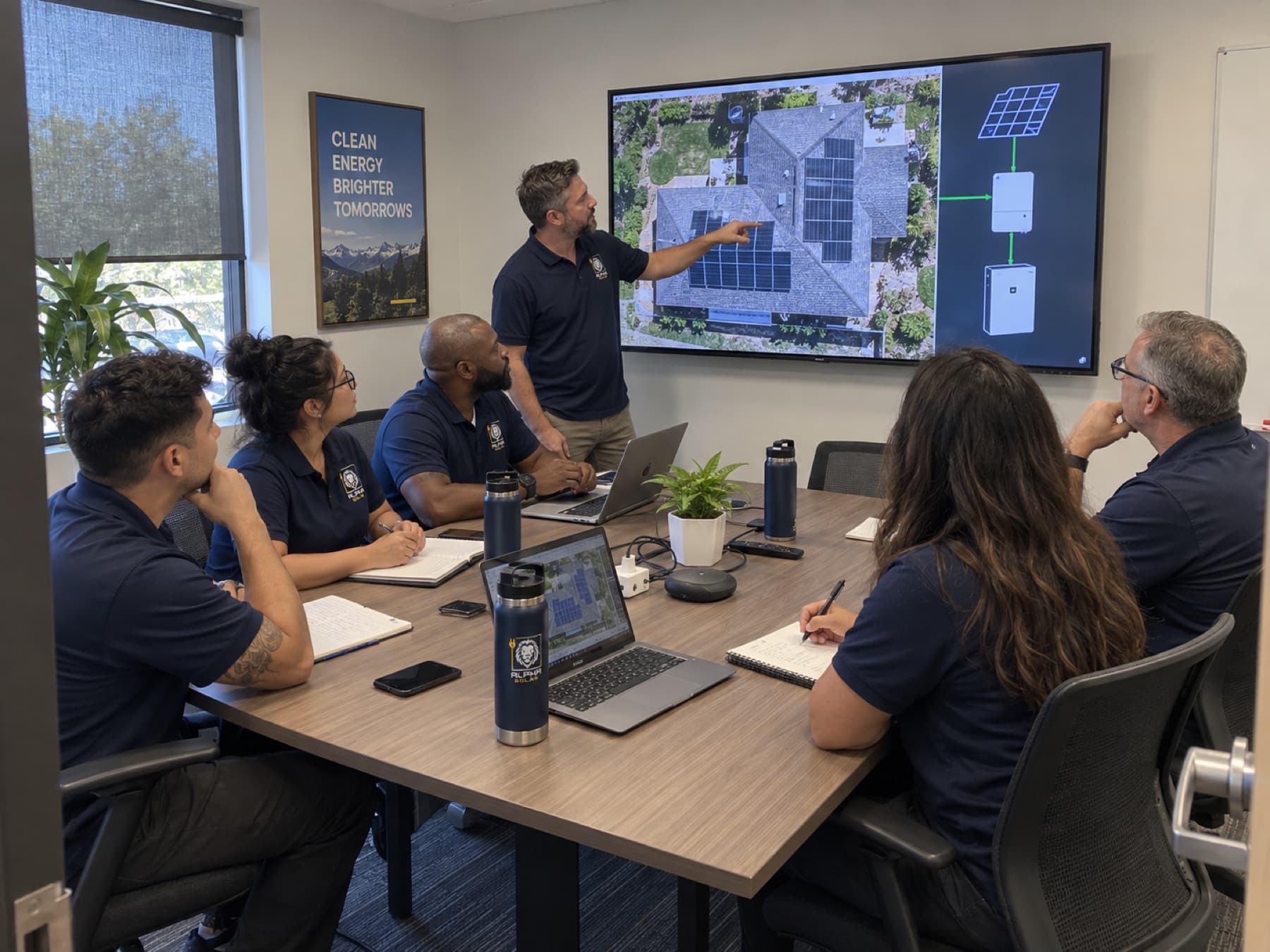
Alpha Solar CA
We translate your electricity usage, equipment choices, and payment options into a plan you understand—and help keep the project moving with Axia by Qcells.
Your questions. Your options. Your project updates.
Axia by Qcells
Axia by Qcells inspects the home, completes the engineering and permitting, installs the system, and coordinates inspection and utility paperwork.
The technical work and physical installation. The installation provider and license are identified in your project agreement.
Financing & energy partners
For a loan, lease, or PPA, the provider handles the financing or system-ownership agreement. Alpha helps you compare these options with a cash purchase.
$0-upfront solar lease and PPA options. Eligibility and approval apply.
Designed around the household
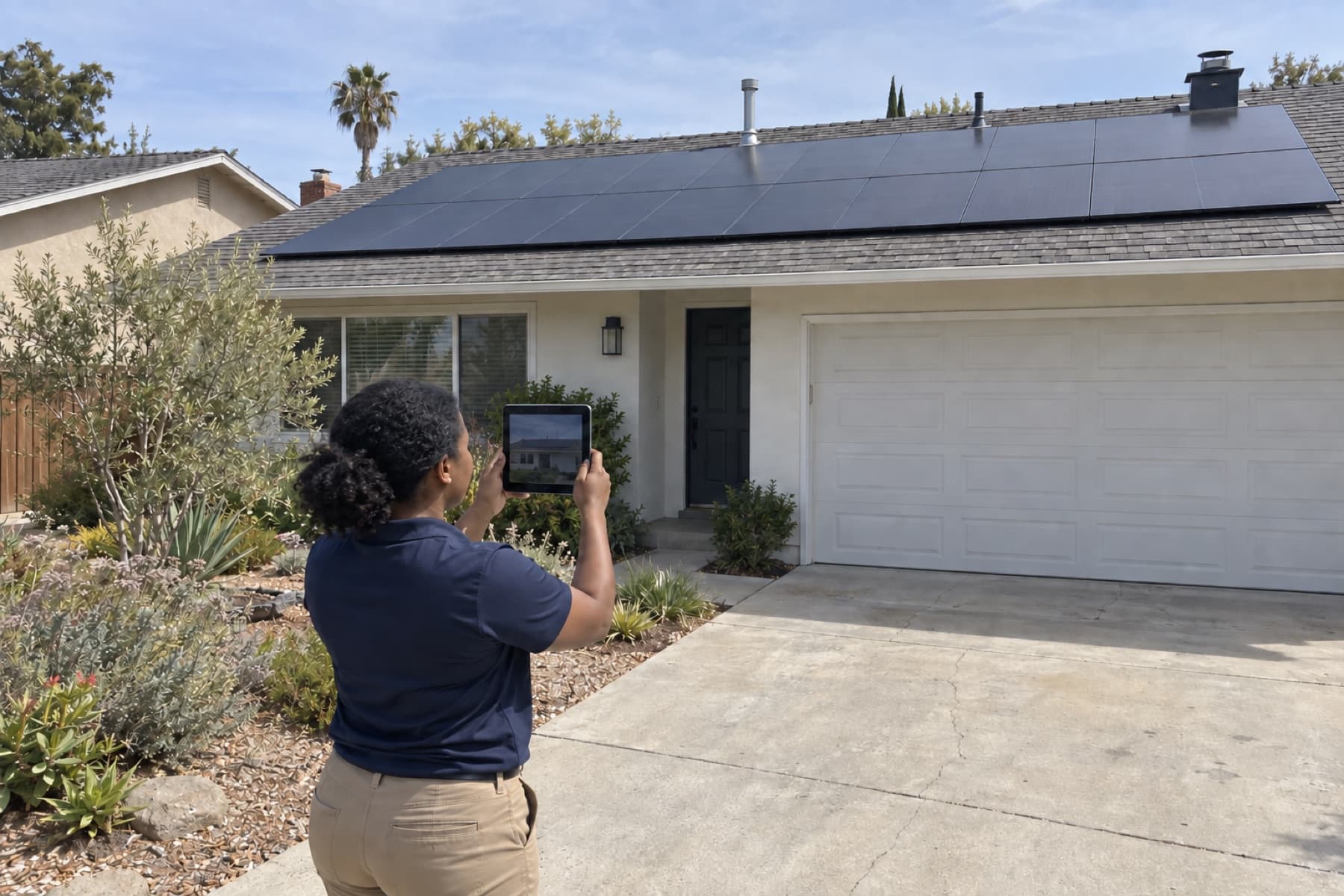
Instead of starting with a preset package, we build the conversation around the home’s usage, goals, utility, and constraints.
How much power does the home actually consume—and when?
Which circuits matter during an outage, and for how long?
What can the roof and electrical system support?
Which payment structure fits the homeowner’s goals?
California statewide
California’s rates and solar economics vary by utility, rate schedule, usage pattern, and home. We start with that context before recommending a system.
Check my California home →Homeowner questions
The right system depends on the home. These are the questions worth answering first.
Buying outright usually offers the lowest total lifetime cost. Our third-party-owned solar plans offer $0 upfront and provider-managed care. With a lease, you pay to use the system; with a PPA, you pay for the power it produces. We compare ongoing payments, maintenance, and total cost so you can choose what fits your household. Program eligibility and approval apply.
Clear roles. Clear accountability.
Alpha Solar CA helps homeowners evaluate solar and battery options. Installation, permitting, inspection, and utility interconnection are performed through our installation partner, Axia by Qcells.
Your home. Your usage. Your options.
Start with your home and current bill. Compare buying outright with a monthly solar plan, then choose the path that fits.