How California Heat Waves Affect Solar Panel Efficiency
Do California heat waves hurt your solar panels? Learn how extreme heat affects efficiency, what you can expect during peak summer, and how to maximize output.
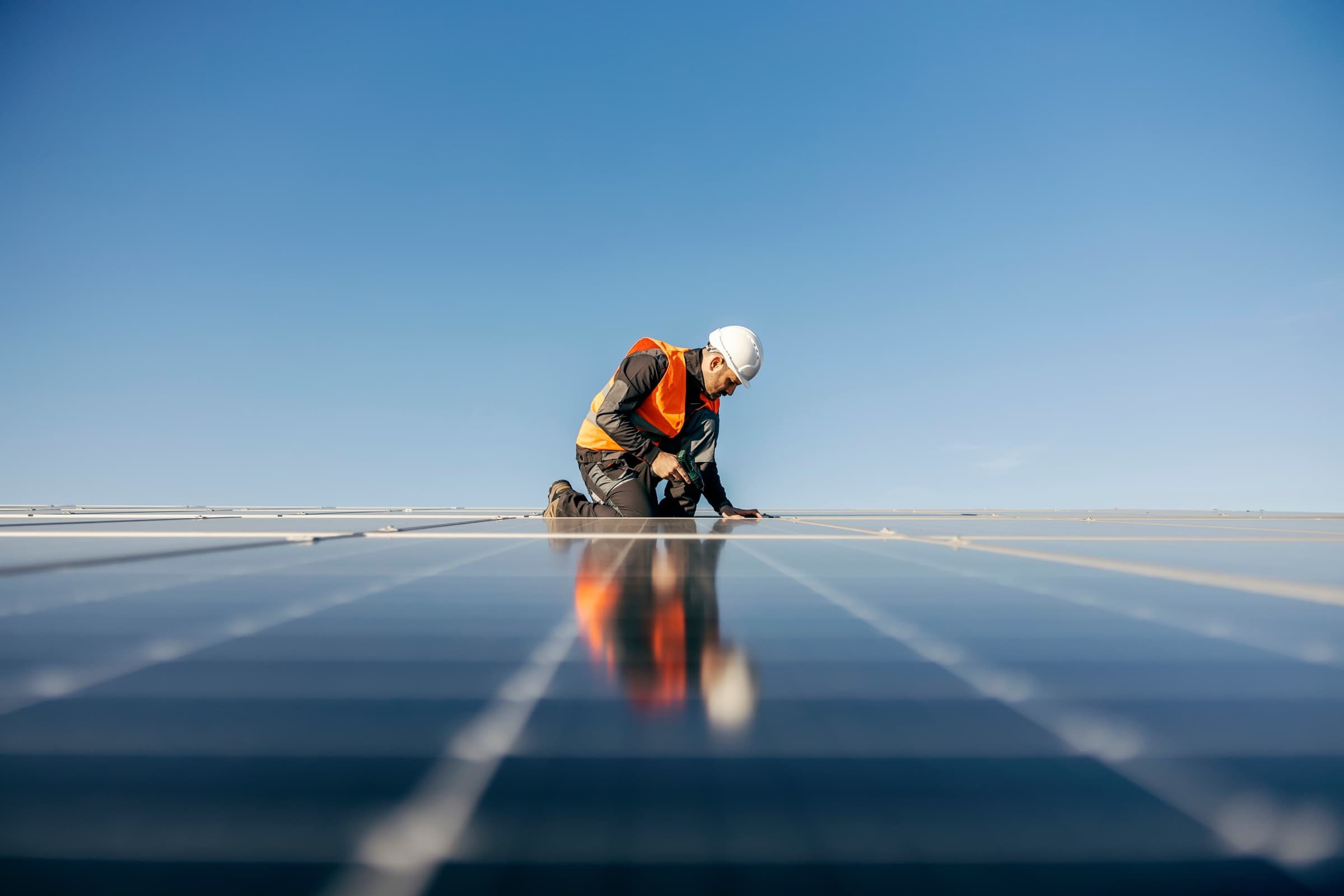
If you live in California, you already know the drill. Every summer, the grid gets slammed, PG&E sends those ominous flex alert texts, and your electricity bill climbs like it's training for Everest. You'd think that all that brutal sunshine would be a dream scenario for solar panels — and mostly, it is. But here's the twist that surprises a lot of homeowners: extreme heat can actually reduce your solar panel efficiency.
Let's break down exactly what happens to your solar panels during a California heat wave, how much production you actually lose, and what you can do about it.
The Counterintuitive Truth: Solar Panels Prefer Cool, Sunny Days
Here's something that catches people off guard. Solar panels generate electricity from light, not heat. They're photovoltaic, not thermal. And like most electronics, they perform best when they're not overheating.
Every solar panel has a rated efficiency measured under Standard Test Conditions (STC), which assumes a cell temperature of 25°C (77°F). That's a pleasant spring afternoon, not a Sacramento July. When the ambient temperature pushes past 100°F — which happened repeatedly during California's record-breaking September 2022 heat wave, when Death Valley hit 127°F and even coastal cities were baking — your panel surface temperatures can climb to 150°F or higher.
Most crystalline silicon panels lose about 0.3% to 0.5% of their efficiency for every degree Celsius above 25°C. That doesn't sound like much until you do the math. On a scorching 110°F day, your panels could be operating 10-15% below their rated output. If you have a 10 kW system that should be producing around 50 kWh on a peak summer day, you might only see 42-45 kWh.
You're still producing a lot of power. But you're leaving kilowatt-hours on the table — right when electricity is most expensive.
Why This Matters More Under NEM 3.0
If you went solar under California's original net metering program (NEM 1.0 or 2.0), you got full retail credit for every kilowatt-hour you exported to the grid. Efficiency losses during heat waves stung, but the financial impact was somewhat cushioned.
Under NEM 3.0, which took effect in April 2023 for new solar customers across PG&E, SCE, and SDG&E territories, the game has fundamentally changed. Export credits have dropped by roughly 75%, and the new structure heavily rewards self-consumption and time-of-use optimization. That means every kilowatt-hour your panels produce — and every one they don't produce — has a direct impact on your savings.
During a heat wave, you're running your AC hard (probably during the expensive 4-9 PM TOU peak window), your panels are slightly underperforming due to heat, and the sun is starting to drop in the sky right when rates are highest. It's a triple squeeze. Understanding this dynamic is critical for sizing your system correctly and deciding whether battery storage makes sense for your home.
Real Numbers: What California Utilities Charge During Peak Heat
Let's put some dollar signs on this. As of 2024, here's what peak TOU rates look like for residential customers at California's big three utilities:
- PG&E (E-TOU-C): Peak rates around $0.54/kWh during summer months (4-9 PM)
- SCE (TOU-D-4-9PM): Peak rates climbing above $0.56/kWh in summer
- SDG&E (TOU-DR1): Peak rates exceeding $0.65/kWh — some of the highest in the nation
When you're paying north of fifty or sixty cents per kilowatt-hour and your panels are producing 10-15% less than optimal, the math starts to add up fast. Over an entire summer, that heat-related efficiency loss could mean $150-$300 in extra grid electricity costs, depending on your system size and usage patterns.
And let's be honest — California heat waves aren't getting shorter or milder. CAISO (the California Independent System Operator) has issued increasingly urgent warnings each summer, and the grid came dangerously close to rolling blackouts during peak events in 2020 and 2022.
What You Can Do to Maximize Solar Output in Extreme Heat
The good news? You're not powerless here. There are practical steps to squeeze the most out of your solar investment, even when the thermometer is out of control.
Choose the right panels from the start. Not all panels handle heat equally. The temperature coefficient varies by manufacturer and technology. Panels from manufacturers like REC, LG (legacy models), and certain SunPower lines have lower temperature coefficients, meaning they lose less output per degree of heat. When you're comparing quotes, ask about this spec — it matters in California more than almost anywhere else.
Ensure proper installation and airflow. Panels mounted flush against a roof with no air gap will run significantly hotter than those with a few inches of clearance underneath. A skilled installer knows how to maximize ventilation behind the array. Roof-mount racking systems that allow convective airflow can reduce cell temperatures by 10-15°C, which translates directly into better performance on hot days.
Add battery storage. A home battery like the Tesla Powerwall, Enphase IQ Battery, or Franklin WholePower lets you store midday solar production (when your panels are cranking, even if slightly derated) and use it during the expensive evening peak window. Under NEM 3.0, this strategy is almost essential for maximizing your return on investment. You avoid exporting cheap kilowatt-hours and importing expensive ones.
Keep your panels clean. Dust, pollen, and wildfire ash — all common in California summers — add an extra efficiency hit on top of thermal losses. A dirty panel during a heat wave is getting hit twice. Annual or semi-annual cleaning can recover 2-5% of lost production.
The Big Picture: Solar Still Wins in California, Heat Waves and All
Let's zoom out for a second. Even with thermal efficiency losses, California remains one of the best places in the country to go solar. The state averages 5.5 to 6.0 peak sun hours per day, utility rates are among the highest nationally (and still climbing — PG&E alone has raised rates over 40% since 2020), and the federal Investment Tax Credit still covers 30% of your system cost through 2032.
Heat-related losses are real, but they're manageable. They're a reason to be smart about your solar design, not a reason to hesitate. A well-designed system with the right panels, proper installation, and possibly battery backup will outperform a cheap, cookie-cutter setup by thousands of dollars over its lifetime — especially as temperatures keep rising.
The homeowners who come out ahead are the ones who understand these nuances before they sign a contract.
Ready to Build a System That Can Handle the Heat?
If you're thinking about going solar in California — or if you already have panels and want to add battery storage to optimize for NEM 3.0 and rising rates — it's worth talking to a team that actually understands these local conditions.
At Alpha Solar CA, we design systems specifically for California's climate realities, not generic national templates. We'll help you choose panels with the right temperature coefficients, ensure your installation maximizes airflow, and figure out whether battery storage makes financial sense for your specific utility and rate plan.
No pressure, no gimmicks. Just a straight conversation about what makes sense for your roof and your budget. Reach out anytime — we're happy to answer questions, even if you're just starting to explore your options.